
Calistree Review – This Calisthenics App Will Keep You On Track
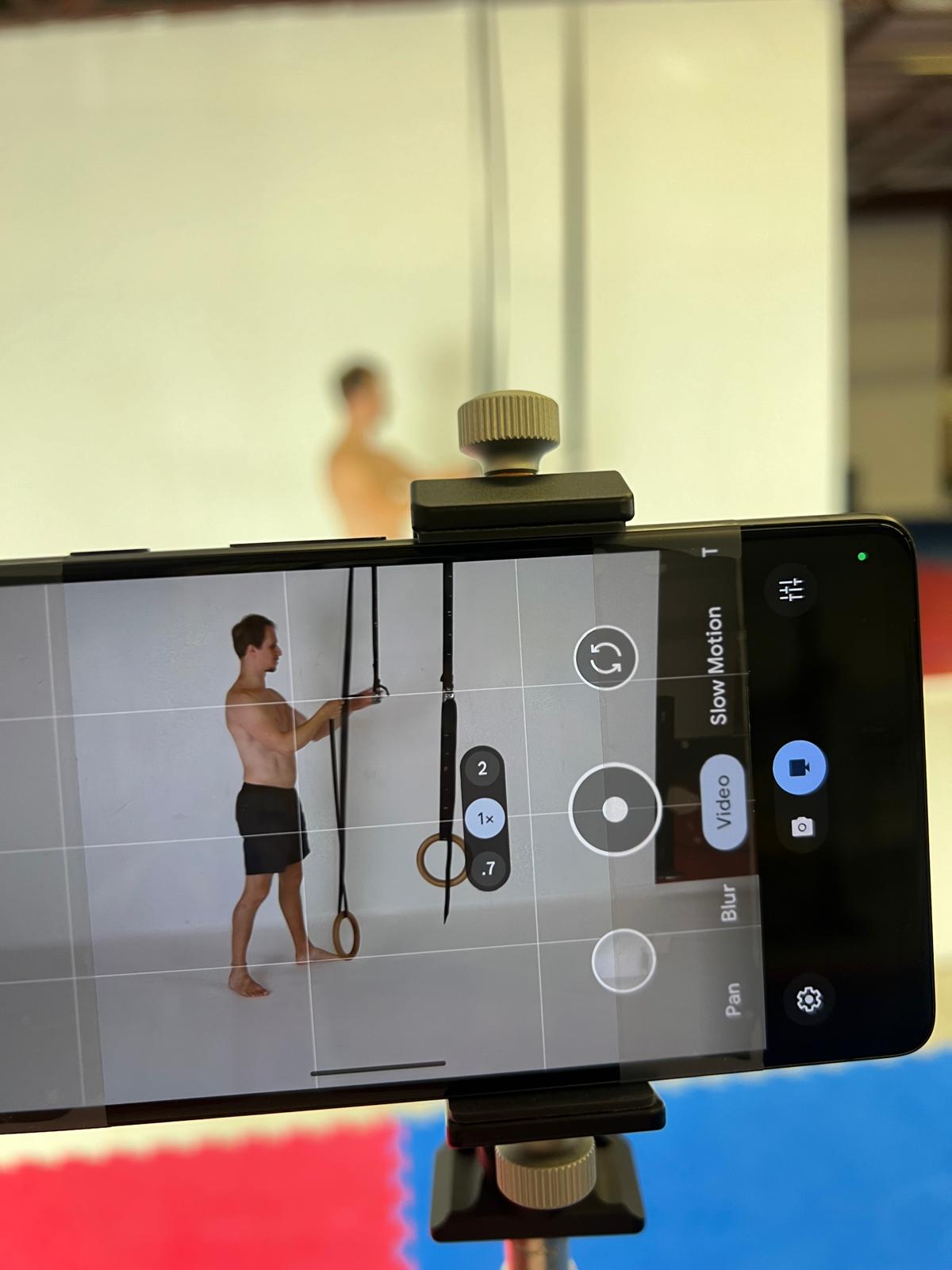
This is a transcript from an interview between Louis Deveseleer (Calistree founder) and Andy Toth from Calisthenics.com.
What personal experiences or challenges in your fitness journey led you to develop Calistree?
I got into calisthenics in 2017 and consumed every resource I could find for guidance in that area: youtube videos, books, paid programs, apps, but my training still felt inconsistent and I didn’t know if I was doing things right. The amount of knowledge is huge and it is not well organized. There are thousands of exercises and everybody has their own system to approach them, with no standard and no comprehensive view.
Calistree is my attempt to solve these issues, by providing a system that meets the user where they are in terms of physical development and makes recommendations that are based on their objectives and equipment available. Everything I’ve learned about fitness is baked into the algorithms that guide the user in their journey. And we’re on our way to include all known exercises, with a detailed library that already includes 1350 of them.
What makes Calistree stand out among the many fitness and calisthenics apps available in the app store?
- It has the largest calisthenics exercise library and is in constant expansion.
- The programs are totally personalized: each program is unique and fully adapted to the user, based on their experience levels, their objectives and their equipment.
- It guides you every step of the way: as you progress, the app makes suggestions based on your results, to tweak your training parameters and ensure consistent progress.
- It is very customizable: you can easily modify the programs to fit your needs and there are options for all training styles.
- It has a fully-featured, forever free plan and an affordable Pro access, because we want to help people as much as possible. Most companies end up having to maximize profits because of investor pressure; Calistree was built differently, without external capital (“boot-strapped”), so we are free to keep it philanthropic.
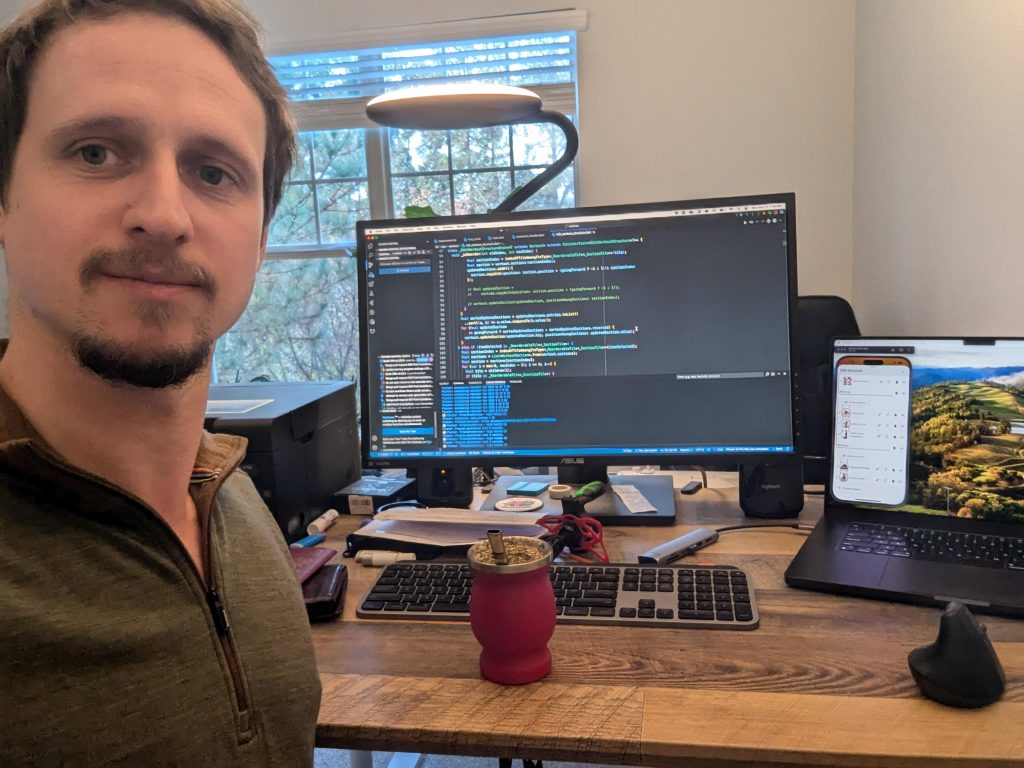
Louis at his workstation enjoying some Yerba mate
How does Calistree cater specifically to calisthenics athletes compared to general fitness apps?
Calisthenics is at the core of the app – that’s actually where the name comes from: Calisthenics Tree (the logo representing a skill tree and personal growth). Compared to more conventional fitness, calisthenics exercises have the particularity to modify the movements as you progress, instead of simply adding more weight. It makes things more fun (in my opinion), but also more complex.
In Calistree, calisthenics exercises are organized in skill trees that make it easy to find the ones available for your level and that will help you progress towards other, more challenging, exercises. You can also work on eccentrics, add weight resistance (such as with a weight vest) for weight calisthenics or band assistance and there are even parameters such as the grip position or the angle used (for example for V-sit or Planche lean exercises). All these tracking parameters allow you to log your workouts very precisely, so that you have a detailed history for each exercise and each muscle, see when you progress and when you plateau, what works and what doesn’t, etc…
It also shows you what is your weak link in performing an exercise and what exercises you could do to move forward. For example if you can’t do a deep squat and the app sees that your leg strength and hip mobility are already pretty good, it will recommend exercises that work your ankle dorsiflexion, since this is likely the remaining aspect that is blocking you.
How has user feedback influenced the app’s features and updates? Can you share an example where user input led to a significant change?
User feedback has a huge impact on what we improve: most features come from user requests. Since last summer (2024), that whole process has been happening publicly on our feedback board: https://feedback.calistree.com/. Everyone can see which features are being worked on or considered for future updates and vote or comment on them. Making our development roadmap public and interactive in this way has been a great experience; it is lovely to discuss all these ideas with the users.
If there is one aspect of the app that I had initially neglected and that users pushed me to add, it’s all the guidance. Most people who use a fitness app want to be told what to do, so that they don’t have to spend the time learning about all these concepts and go through the long trial and error to figure out what works for them. That’s why now the workouts are generated for you and tweaked automatically as you progress, to stay aligned with your growing capabilities and keep moving you forward.
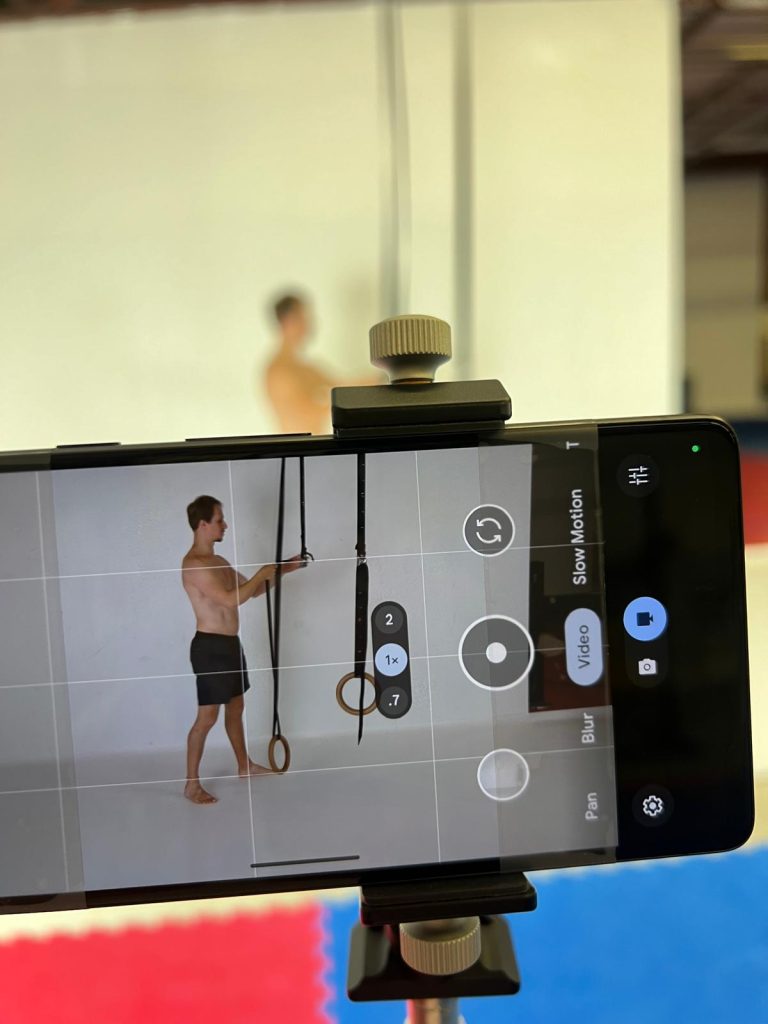
Recording videos for new exercises at the home-made studio.
What were some of the major challenges you encountered during the development of Calistree, and how did you overcome them?
The biggest hurdle was probably learning how to build a mobile app! I used to work as a mechanical designer, creating machines, and I had no idea how to create an app. I couldn’t afford to pay (nor convince) anyone to build it for me, so I followed an online tutorial to learn the basics of app development. Then I slowly started building parts of what I envisioned for Calistree and learned the rest along the way (still learning today, 5 years later). It was a steep learning curve, but I was determined to give birth to this idea; also the pandemic lockdown hit us that same year, so I just happened to have more free time to dedicate myself to this project.
The other big challenge was to learn how to manage a business. I worked with a few startups before, but this is the first one I create and manage myself and there were many aspects to learn, between accounting, marketing and legal questions… I am not very good at all these things and prefer focusing on building the best product possible, which is the part I truly enjoy. That’s why Calistree is such a product-centric company that grows thanks to organic discovery and word-of-mouth from happy users.
Can you elaborate on how Calistree tailors workouts to individual users’ levels, goals, and available equipment?
There are few things more annoying in life than being recommended a program that you can’t do simply because it requires equipment you don’t have. In Calistree, you can create an “Equipment location” for each place where you train (home, gym, park, etc.) which contains the equipment available there. That way, only the exercises that can be performed with the equipment at your disposal are recommended.
Next are the objectives: there are many valid ways to achieve physical fitness and every person has their own preference. Some are attracted by the fancy calisthenics skills, some just want to be able to do a Pushup and a Pullup, others prefer doing lots of mobility work or improve their cardiovascular capacity. All these things are good to pursue (and with time, maybe you can even work on all of them). That’s why in Calistree you can choose your own objectives. The programs generated and the suggestions take your personal objectives into account to pick the most relevant exercises. That way you work on things that really motivate you and the workouts are more fun!
We all have different strengths and weaknesses: some people have lots of upper body body strength, some are super flexible and others have impressive cardio capacities. To account for that, Calistree uses your workout history to compute very precisely your strength and flexibility of each muscle, as well as your detailed balance and cardiovascular levels. That gives the algorithms a clear picture of where you stand and how challenging any exercise will be for you. The more workouts you log, the more data will be available to refine the estimates. That’s why we want to keep adding more exercises and various fitness activities, so that you can log everything into Calistree, to get the most complete overview of your evolving fitness levels, and get the best recommendations possible.
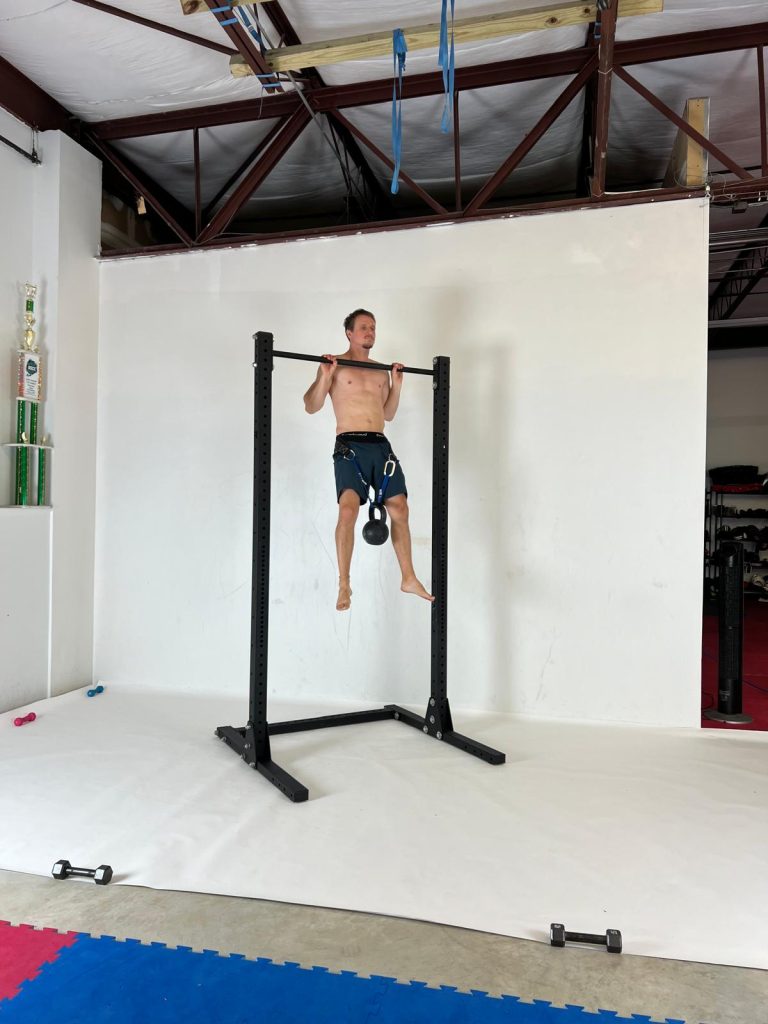
Demonstrating a weighted pullup (coming soon to the library!)
The skill tree is a unique feature of Calistree. How does it enhance a user’s training experience, and what inspired its inclusion?
The skill tree indicates how various exercises are linked together, in terms of difficulty progressions. In traditional weight training, the progressions are fairly straightforward: you simply add weight or volume. With calisthenics, you need to change the levers and there are also flexibility or balance requirements that come with some movements. It can be difficult to identify what you need to work on, or possible intermediate steps, to be able to perform a specific exercise.
That’s where the skill tree comes to the rescue. Simply open the tree of the exercise you want to achieve, and explore the branches that lead to it, until you find a difficult level that is adapted. You now have something to work with, and a clear path ahead for your future progressions!
As an added bonus, it also looks pretty cool and many users mentioned how training with Calistree feels a bit like playing an RPG :p
What are Journeys and Custom Flows and how to use them best?
A Journey contains a set of objectives, equipment and a training program, which you can generate or build yourself. For example you could have an “Upper body” Journey where you work on getting a Front lever, a Planche and a V-sit, and a “Lower body and core” where you work your single-legs squats, Nordic curls and Dragon flag. As you log workout sessions, you will sometimes get recommendations to tweak your training program to keep you progressing towards your goals and keep things fun.
When you practice calisthenics, yoga and primal movements, sometimes you end up doing several exercises in a row, where you flow smoothly from one movement to the next in a cycle. In Calistree, we call them Flows and users can create their own with the “Custom flows”. Simply by selecting a few existing exercises, they create a new one, that has the sum of the characteristics of its components, and can this way be accounted for precisely for their experience profiles and objectives progressions (and make the workouts more interesting).
Any tips for setting Objectives effectively? For example: if I want to learn different skills but for that I also need to get stronger and more flexible, how do I set the objectives?
There is a lot of freedom in how you can set things up, in terms of objectives to choose from and how to divide them up between your journeys, and there are different ways to train effectively. I think these are the general rules you should try to follow to keep progressing effectively:
- Don’t work the same muscles groups two days in a row (they need time to recover).
- Each objective should be worked on 2-3 times per week to create enough stimulus for progress. To work on more than 3 different objectives simultaneously, you need “Split routines” which in Calistree means having 2 or 3 journeys, each with its own set of objectives (for example “Push – Pull – Legs”, or “Skills – Full body – Yoga” split routines)
- Be consistent: don’t switch programs every week, try to follow one for 4-8 weeks before switching to a different set of objectives.
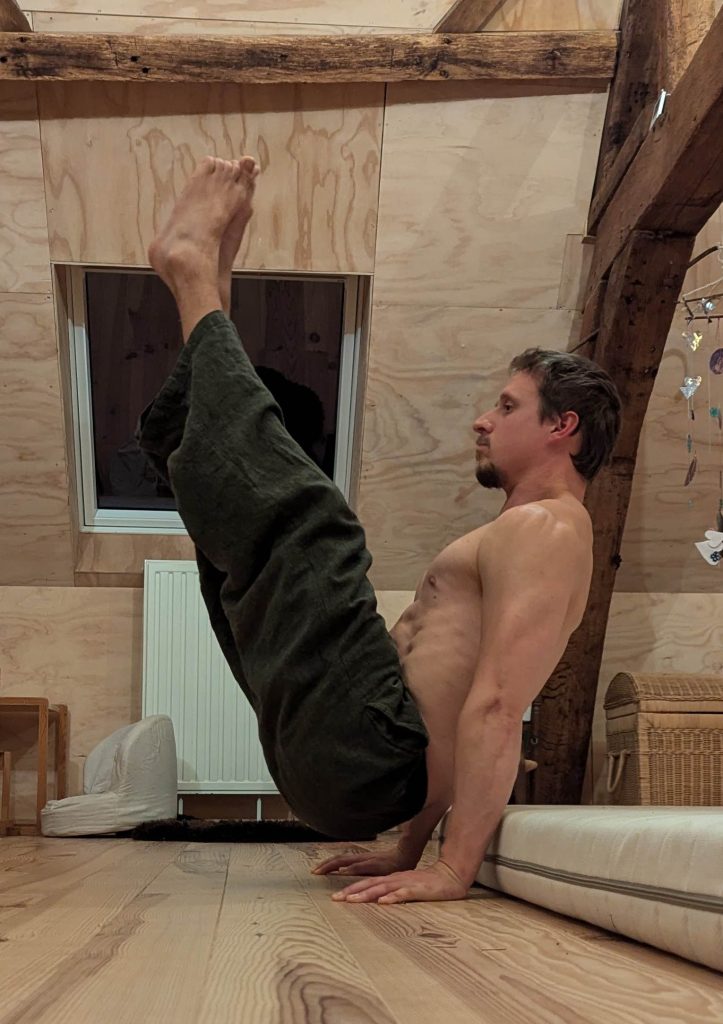
One advantage of calisthenics: it can be practiced anywhere.
Why subscribe and go Pro? What are the features that get unlocked in the Pro version? Who would you recommend to upgrade?
The main reason to get the Pro access is to be able to create several Journeys. This gives you the ability to follow a split routine training, where you focus on various parts of your body depending on the day, or add flexibility, balance or cardio sessions in-between your strength training days. We’ve structured things this way so that more casual users, who workout 2-3 times per week maximum, can have enough with the free version, so that anyone can use the app to move more and feel better. But people who train seriously will definitely benefit from the extra capabilities of the Pro version.
Besides the extra Journeys, the Pro access gets some other perks like multiple Equipment locations (if you train in different places), more workout buddies (to follow their progress), more custom exercises and flows, and custom theme colors (to personalize the look of the app to your liking). All the other features are available on the free plan, which is unlimited in time and in number of workout sessions.
In what ways does Calistree foster a sense of community among its users? Are there any social features that encourage interaction between users? What are they and why did you implement them?
You can head over to the “Community” page in the app and see the most recent workout sessions completed by other Calistree users (if they left their session privacy on “public”). I think it’s really cool and encouraging to see that people all over the world are using the app at the same time and putting in the work to improve their life with movement practice.
If people in your life also use the app, you can connect with them and become “Workout buddies” in Calistree. That will add them to a “Leaderboard” that shows how many Experience points they have accumulated in the last 7 days.
Outside of the app, we stay close to our users through social media interactions on the Subreddit and Instagram channels and through the public feedback board.
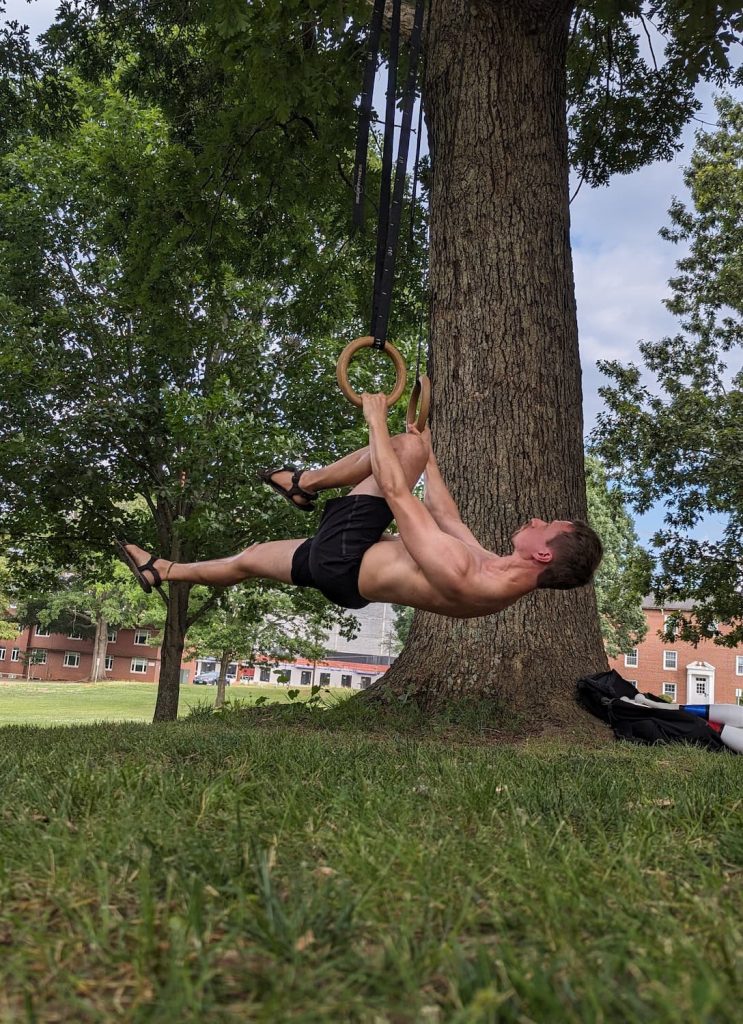
Combining outdoor time with working out.
Can you share a memorable success story from a Calistree user that highlights the app’s impact?
Here is an extract from an interview I did with a user, who also talked about how the app supported her in a difficult time in her life, by helping add movement again in an approachable and gradual way:
“I looked at a ton of apps. I initially wanted something for stretching but I wanted something more than just the basics. I wanted something to support me and, honestly, I didn’t want to think, I wanted something to tell me, to guide me, and I wanted it to support and complement all the activities that I already do. I wanted it to help me with mobility, my flexibility, my recovery after my weight training or my cycling, and I wanted it to fit in with my lifestyle, and it’s met all those, and so much more, I am so impressed!
The other apps were basic. They were just basic stretching or basic movements, there wasn’t any added value, they were boring! They were minimal and not enough to hold me, not enough for me to want to go back and use it.
I could talk for a while of how unbelievably flexible and amazing Calistree is. There is no barrier: no time barrier, no equipment barrier, no age barrier, no knowledge barrier. Anyone can use it, anybody. Wonderful!”
What new features or improvements can users expect in the near future?
Some of the big plans we have for 2025 involve pre-made workout schedules with cycles and rest periods, better support for weight exercises and tracking of steady-state cardio activities. We’re currently working on a cleanup of the exercise library structure, in order to make it easier to add new exercises and expand the disciplines covered. We also want to develop the social aspects, with comments and kudos on other users’ workout sessions, and allowing users to publish their own custom flows, to celebrate our community’s creativity.
Besides those big ideas, we’re always making improvements to make things more clear and guide the user better in their fitness journey. It’s extremely rewarding to keep improving the app, because people often notice the efforts and thank us for the quality of the experience.
Where do you see Calistree in the next five years? How do you plan to evolve the app to meet the changing needs of fitness enthusiasts?
We’ll keep adding exercises and guidance features so that Calistree becomes the best coach you can imagine! It will be able to track any activity and analyze your entire profile to give you the most adapted programs for gains and avoiding injury. It might even be able to watch you work out to count the reps for you and give you form tips as you go!
What have you learned about the intersection of technology and fitness through the development of Calistree?
Turning fitness concepts into algorithms has been a very interesting process. When you coach a client or build a training program for yourself, there are a lot of elements that come into consideration; some are conscious and others are subconscious assumptions or shortcuts. To build Calistree, all those elements have been detailed, listed and baked into equations, so that the algorithms “understand” the exercises, how they relate to each other and the human body, what makes up a good workout, and what should a user do in order to progress towards specific goals efficiently and without getting hurt.
But there is still so much more to learn about the best way to train… Our understanding of the human body and physical training is still in its infancy. With the “Experience profiles” in the app, we’re starting to reach the limits of the current state of exercise science knowledge. We hope to be able to contribute to the field by collaborating with researchers in the future and apply that knowledge in the app.